A Better Fat for
a Better Kitchen
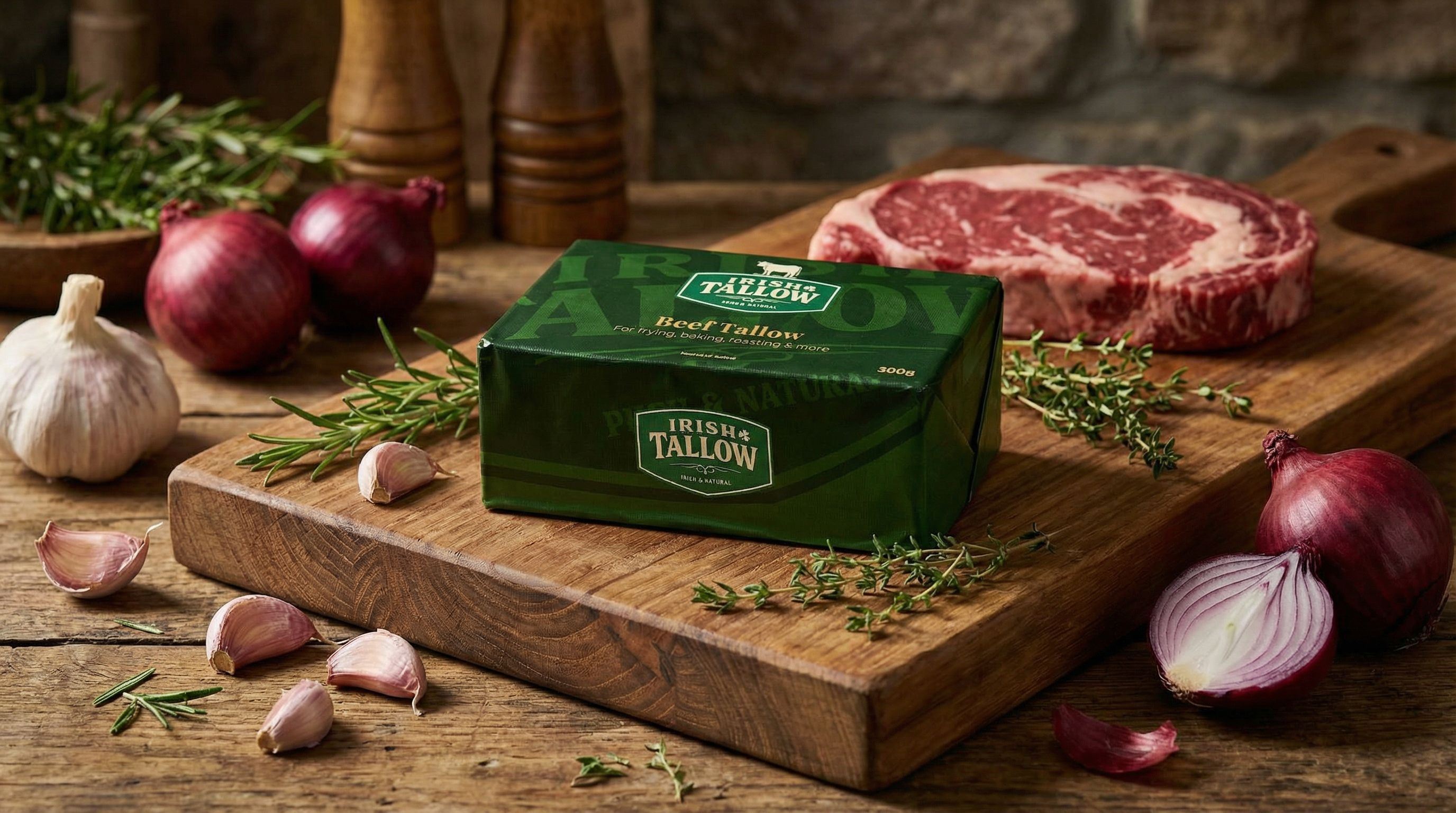
Beef tallow has been a trusted cooking fat for centuries - prized for its flavour, its versatility and its natural ability to handle the heat. Here is what makes it worth a place in your kitchen.




What Exactly Is Beef Tallow?
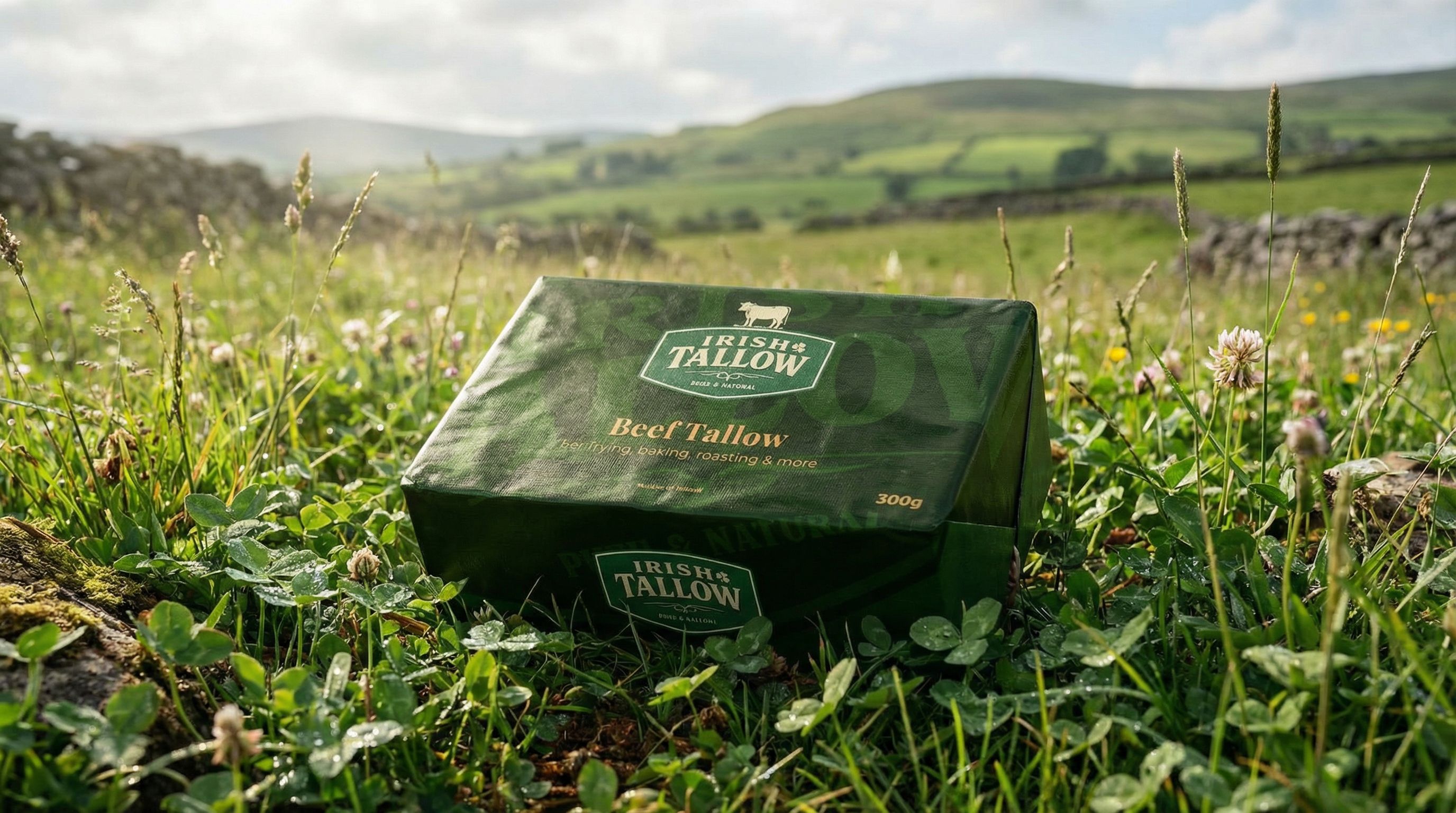
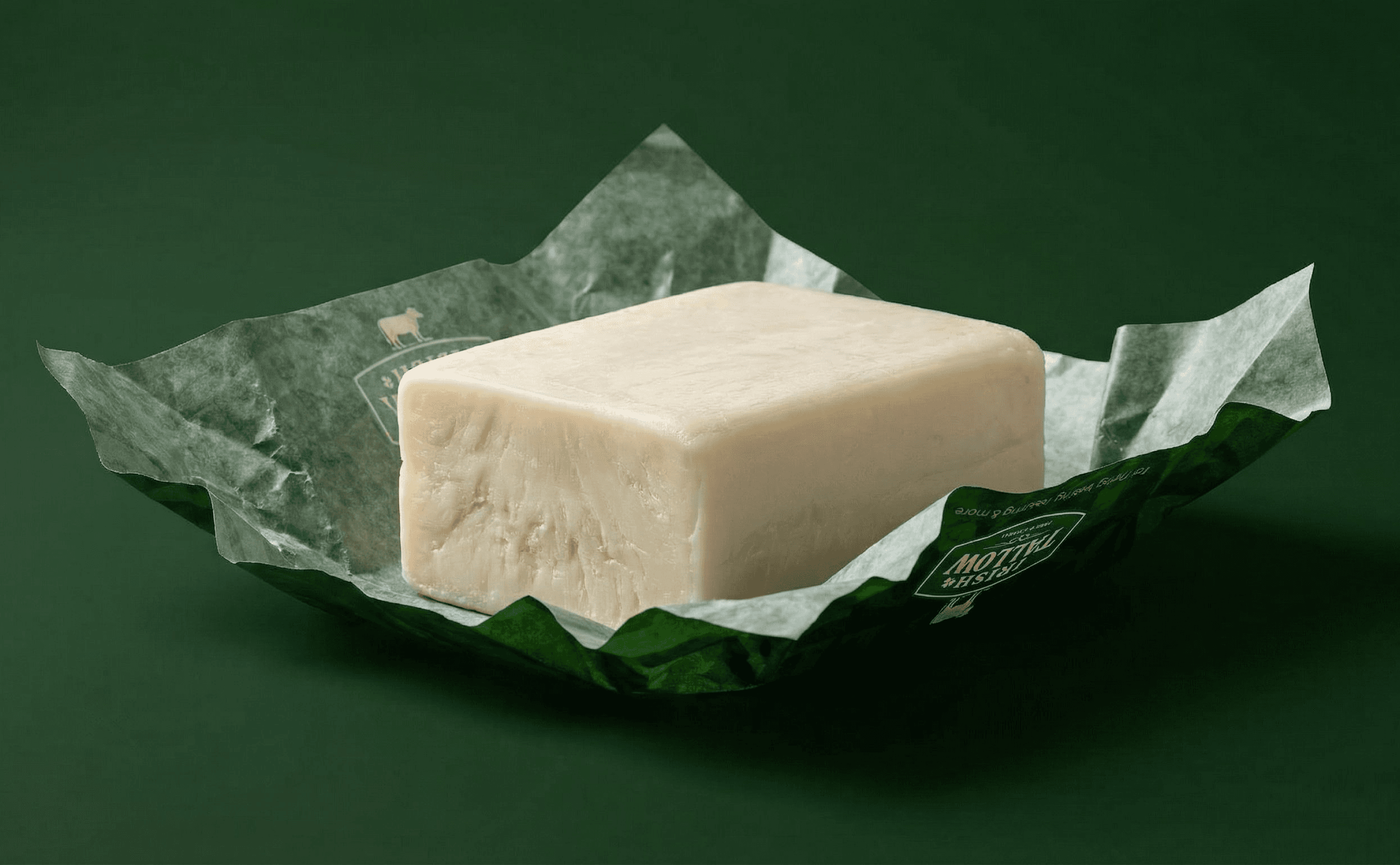
Beef tallow is simply rendered beef fat. The fat is gently heated until it melts, then carefully filtered to remove any solids.
The result is a clean, pure cooking fat. Its high smoke point makes it particularly well-suited to recipes requiring stability at high heat. It remains chemically stable and does not oxidise under stress. This stability matters both for flavour and for health.
What Is in Beef Tallow?
A simple, nutrient-rich fat with more to offer than you might expect.
Beef tallow is made up almost entirely of natural fat - and that fat brings real benefits to the table.
Long considered a cornerstone of traditional diets, beef tallow is experiencing a revival and is becoming increasingly recognised as one of the most nutrient-dense cooking fats available. Beef tallow is one of the traditional whole-food fats that nourished generations before the modern dietary shift - valued for its natural nutrient profile, cooking stability and deep roots in real-food kitchens.
Nutrient
Per 100g
Why It Matters
Monounsaturated Fat
The same type of beneficial fat found in olive oil. Makes up over 40% of tallow's total fat content.
Polyunsaturated Fat
Exceptionally low, which gives tallow its natural stability at high cooking temperatures and a longer shelf life.
Oleic Acid
The most abundant fatty acid in tallow - the same one celebrated in olive oil for supporting overall wellbeing.
Omega-6 (Linoleic Acid)
Naturally very low in omega-6, particularly from grass-fed cattle. Omega-6 fats are more vulnerable to oxidation, so less means greater stability.
Fat-Soluble Vitamins
A natural source of fat-soluble vitamins that support skin health, immune function and overall wellbeing - nutrients often absent in industrially produced fats.
Source: USDA FoodData Central
One Ingredient. Nothing Hidden.
Deep Frying
Tallow is a natural choice for deep frying. Traditionally, both Belgian frites and French pommes frites were fried in beef tallow (known as blanc de boeuf or ossewit), delivering the rich flavour and signature crispiness that defined the dish.
Roasting
A spoonful of tallow in a hot roasting tin is the secret to perfect roast potatoes and vegetables. It creates beautifully crisp, caramelised edges that no other fat quite matches.
Pan Frying and Searing
Steaks, chops, burgers, eggs - tallow handles them all. It gives you a clean, even sear and adds a subtle savoury depth to anything cooked in the pan.
Baking
Tallow works beautifully in savoury baking. It creates a short, flaky texture in pastry and pie crusts. For the best results, try a blend of tallow and butter - tallow for structure, butter
for flavour.
How to Store Beef Tallow
Beef tallow is easy to store and keeps well when looked after properly. Because it is pure rendered fat with virtually no moisture, it isnaturally resistant to spoilage.
At Room Temperature:
Keep it in an airtight container in a cool, dark place. Well-filtered tallow will keep for months stored this way.
In the Fridge or Freezer:
For the longest shelf life and best quality, refrigerate or freeze your tallow. It solidifies firm in the fridge and can be frozen for extended storage without any loss in quality.
After Cooking: If you have used tallow for frying, strain it through a fine sieve to remove any food particles, then store it in the fridge. This helps it last longer and keeps the flavour clean. Discard it if it smells off, darkens significantly or begins to smoke at lower temperatures than usual.